Damage Comments
Prior to 2008, the "Damage" column on the location wind impact reports contained a damage description based on the Saffir-Simpson scale. While certainly a good measure of storm strength, we have found that the Saffir-Simpson scale is not necessarily tailored for damage at individual locations. In 2008 we introduced the ability for the user to choose an alternative scale which is based on observed damage in real situations. This scale is based on work done by the scientists at Texas Tech University and is modified somewhat for hurricanes.
The user can select the damage scale they would like to use via the User Preferences - Report/Impact Analysis option. The option selected will be reflected in the system on all wind impact summary and "hourly" reports.
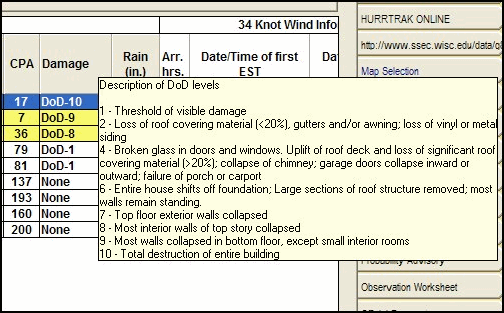
While viewing a report, the user can display the entire scale by moving the mouse over the DAMAGE header.
Or to see the description of an individual damage level, point the mouse at that value.
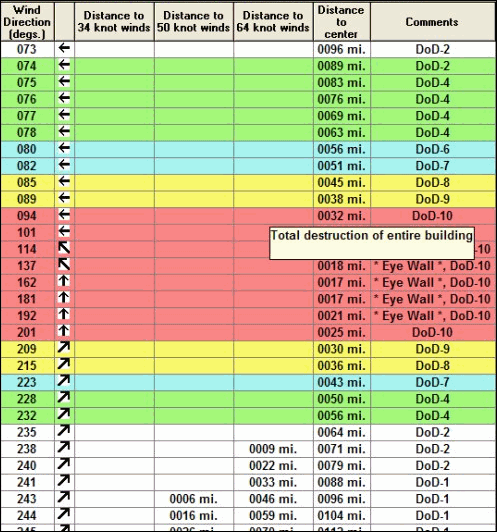
The two scales available are shown below:
Saffir Simpson
Scale:
Category One Hurricane:
Winds
74-95 mph (64-82 kt or 119-153 km/hr). Storm surge generally 4-5 ft above normal.
No real damage to building structures. Damage primarily to unanchored mobile homes,
shrubbery, and trees. Some damage to poorly constructed signs. Also, some coastal
road flooding and minor pier damage.
Category Two Hurricane:
Winds 96-110 mph (83-95 kt or 154-177 km/hr). Storm surge generally 6-8 feet
above normal. Some roofing material, door, and window damage of buildings. Considerable
damage to shrubbery and trees with some trees blown down. Considerable damage to
mobile homes, poorly constructed signs, and piers. Coastal and low-lying escape routes
flood 2-4 hours before arrival of the hurricane center. Small craft in unprotected
anchorages break moorings.
Category Three Hurricane:
Winds 111-130 mph (96-113 kt or 178-209 km/hr). Storm surge generally 9-12
ft above normal. Some structural damage to small residences and utility buildings
with a minor amount of curtainwall failures. Damage to shrubbery and trees with foliage
blown off trees and large trees blown down. Mobile homes and poorly constructed signs
are destroyed. Low-lying escape routes are cut by rising water 3-5 hours before arrival
of the center of the hurricane. Flooding near the coast destroys smaller structures
with larger structures damaged by battering from floating debris. Terrain continuously
lower than 5 ft above mean sea level may be flooded inland 8 miles (13 km) or more.
Evacuation of low-lying residences with several blocks of the shoreline may be required.
Category Four Hurricane:
Winds 131-155 mph (114-135 kt or 210-249 km/hr). Storm surge generally 13-18
ft above normal. More extensive curtainwall failures with some complete roof structure
failures on small residences. Shrubs, trees, and all signs are blown down. Complete
destruction of mobile homes. Extensive damage to doors and windows. Low-lying escape
routes may be cut by rising water 3-5 hours before arrival of the center of the hurricane.
Major damage to lower floors of structures near the shore. Terrain lower than 10
ft above sea level may be flooded requiring massive evacuation of residential areas
as far inland as 6 miles (10 km).
Category Five Hurricane:
Winds greater than 155 mph (135 kt or 249 km/hr). Storm surge generally greater
than 18 ft above normal. Complete roof failure on many residences and industrial
buildings. Some complete building failures with small utility buildings blown over
or away. All shrubs, trees, and signs blown down. Complete destruction of mobile
homes. Severe and extensive window and door damage. Low-lying escape routes are cut
by rising water 3-5 hours before arrival of the center of the hurricane. Major damage
to lower floors of all structures located less than 15 ft above sea level and within
500 yards of the shoreline. Massive evacuation of residential areas on low ground
within 5-10 miles (8-16 km) of the shoreline may be required.
Texas
Tech Study Scale (modified):
|
DOD*
|
Damage
description |
|
1
|
Threshold
of visible damage |
|
2
|
Loss
of roof covering material (<20%), gutters and/or awning; loss of vinyl or
metal siding |
|
3
|
Broken
glass in doors and windows |
|
4
|
Uplift
of roof deck and loss of significant roof covering material (>20%); collapse
of chimney; garage doors collapse inward; failure of porch or carport |
|
5
|
Entire
house shifts off foundation |
|
6
|
Large
sections of roof structure removed; most walls remain standing |
|
7
|
Exterior
walls collapsed |
|
8
|
Most
walls collapsed, except small interior rooms |
|
9
|
All
walls |
|
10
|
Destruction
of engineered and/or well constructed residence; slab swept clean |
More information on the Texas Tech Study can be found at http://www.wind.ttu.edu/EFScale.pdf. Again, we use a modified version of this to account for hurricanes.